A Tradition of Light and Legacy
Celebrating Sankranti Through Generations
Submitted by the Susarla Family
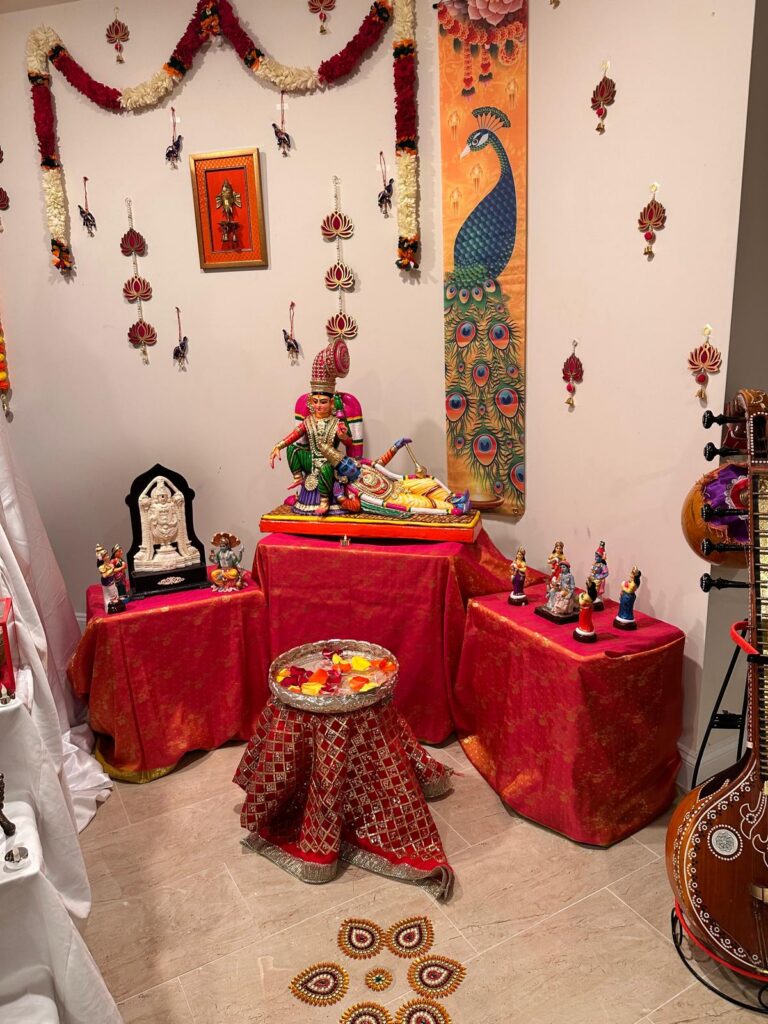
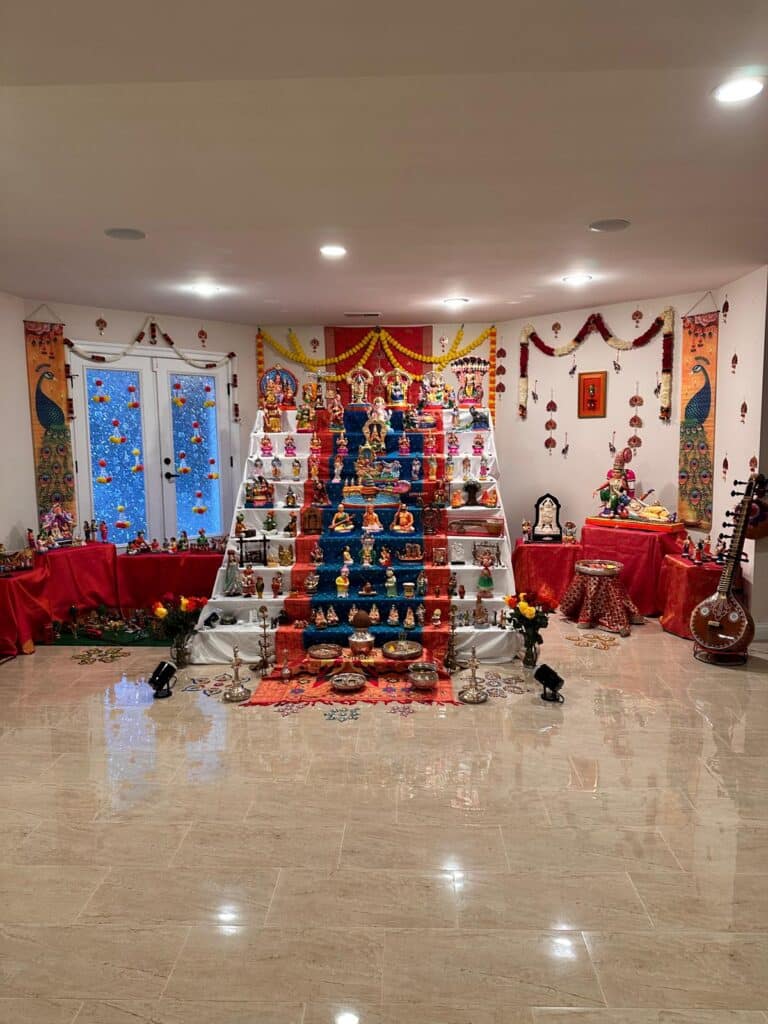
Sankranti, also known as Makar Sankranti, is an important Indian harvest festival celebrated in mid-January. It marks the Sun’s transition into the zodiac sign Capricorn (Makar) and the beginning of Uttarayan, a period of lengthening days signaling the end of winter. The festival symbolizes new beginnings, gratitude to nature, and togetherness. It is celebrated across India with regional variations such as Pongal in South India and Lohri in North India. Common traditions include kite flying, bonfires to discard negativity (Bhogi), setting up dolls (Bommala Koluvu), preparation of festive foods made with rice, sesame, and jaggery, charity through donations, and honoring farm animals for their role in agriculture.
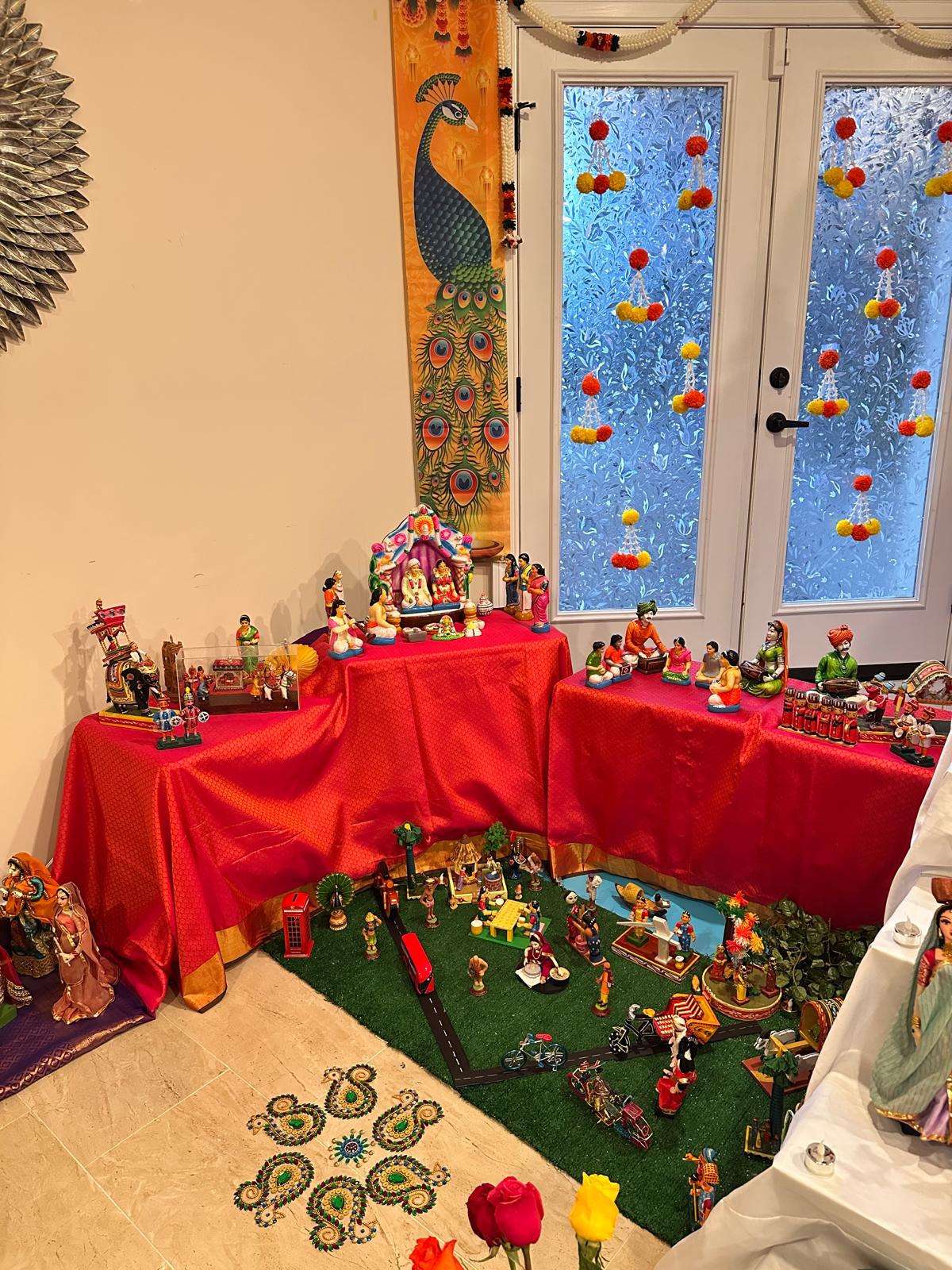
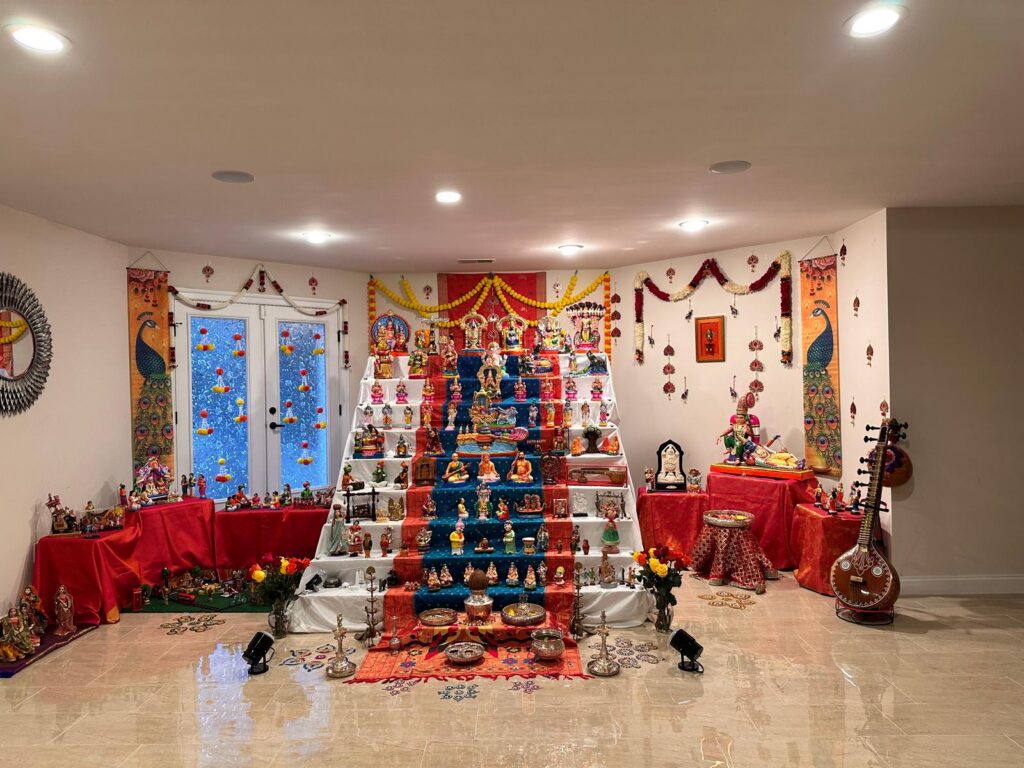
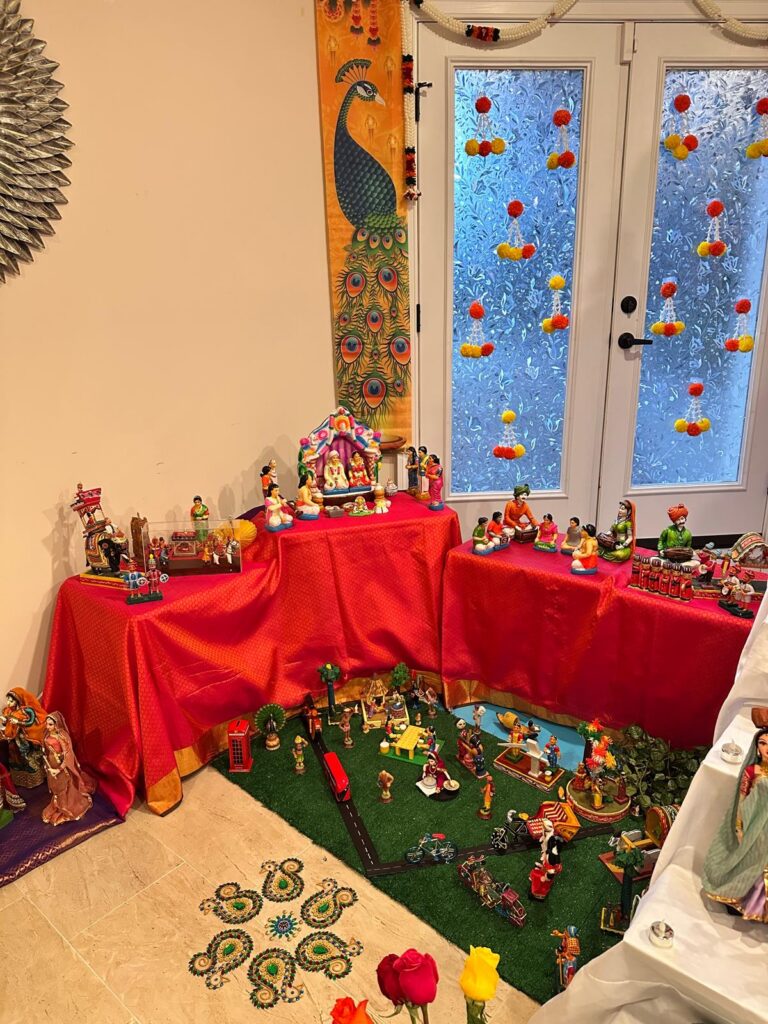
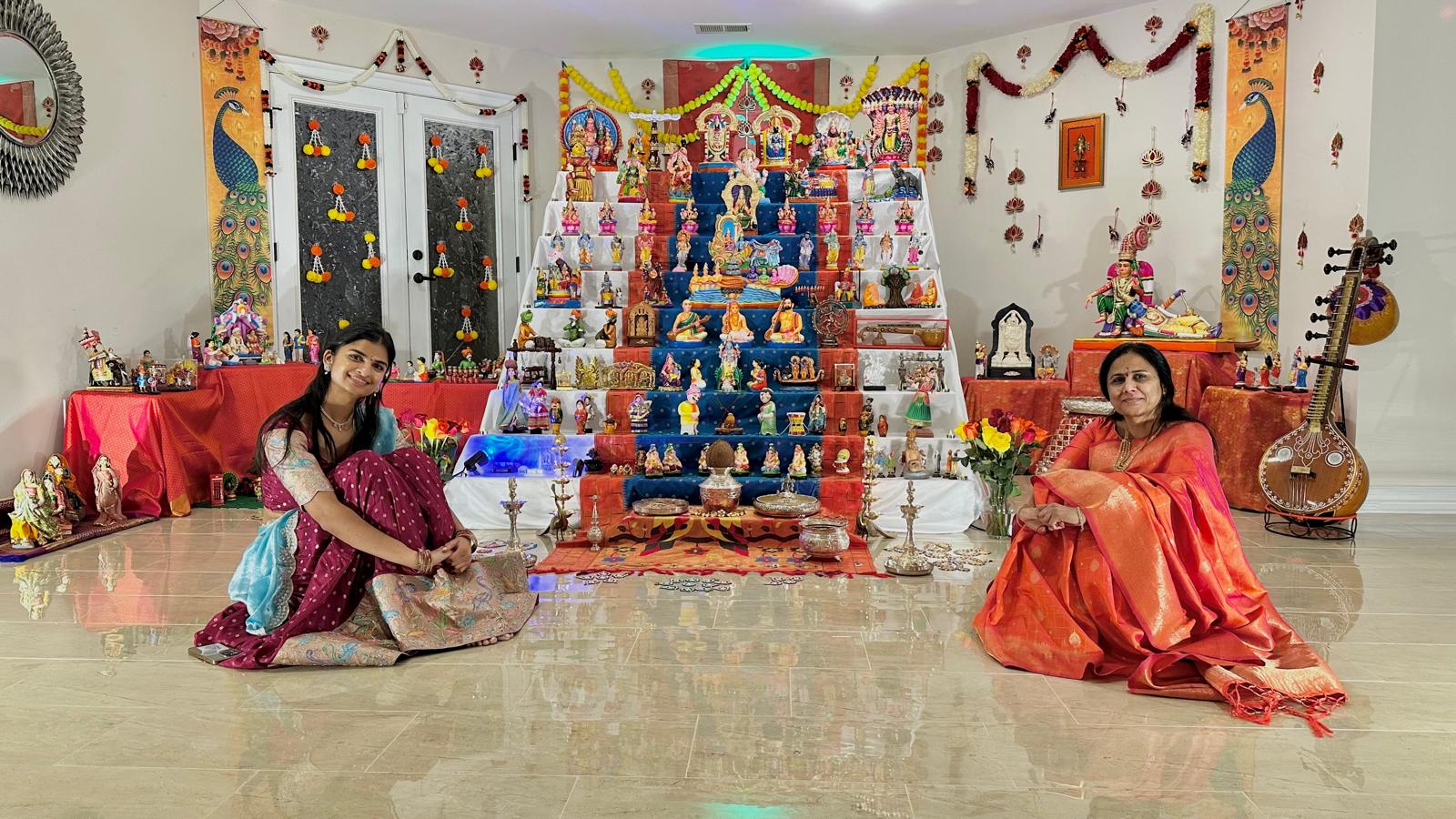
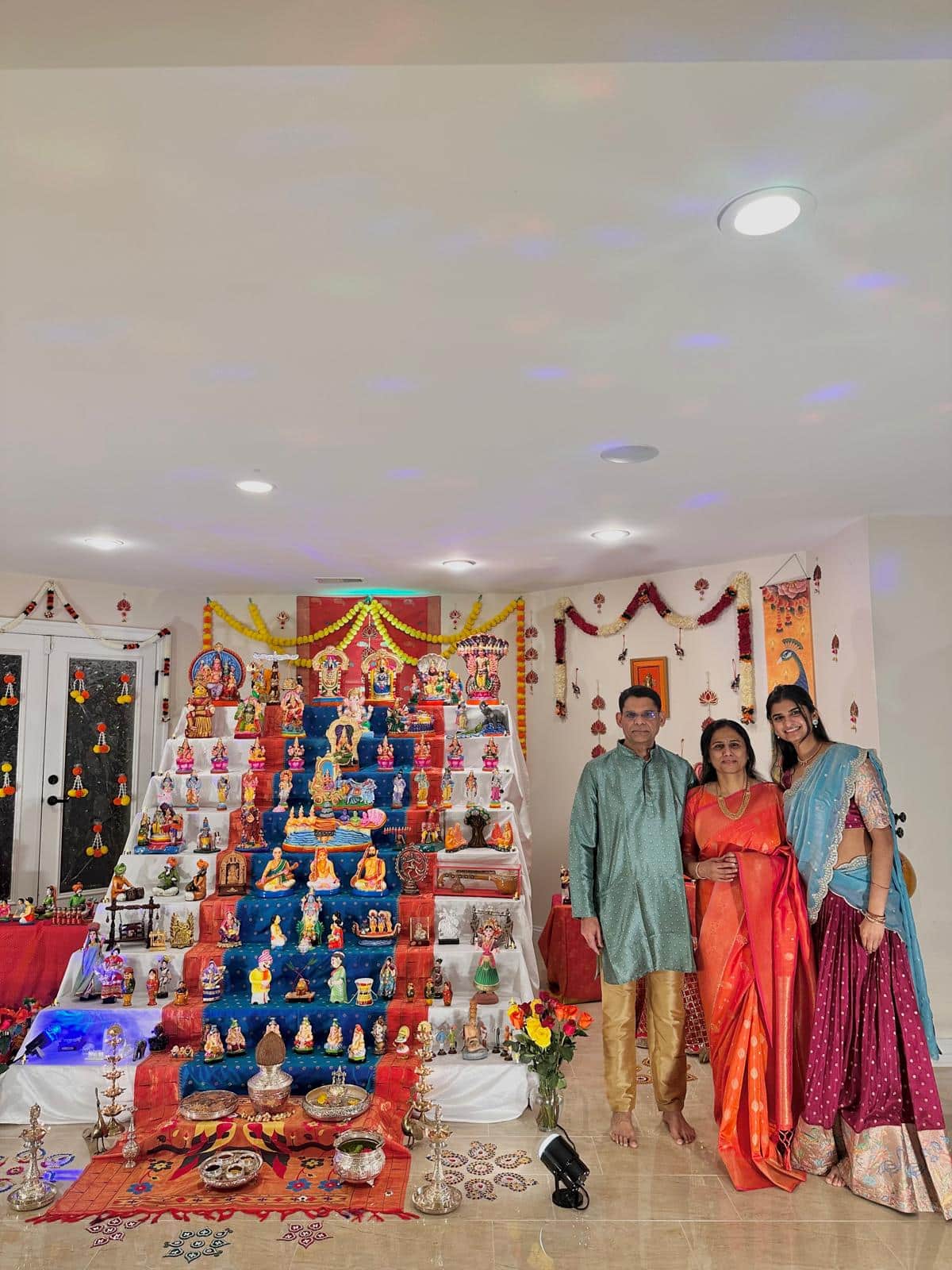
A specific cultural highlight in Andhra Pradesh (a state in south India) during this time is Bommala Koluvu, which translates to the “arrangement of dolls.” These displays are arranged on tiered steps, decorated with lamps, flowers, and rangoli. Historically, Bommala Koluvu serves to depict village life and mythology, acting as a medium to pass cultural stories and values down to younger generations while fostering community bonding through hospitality and storytelling.
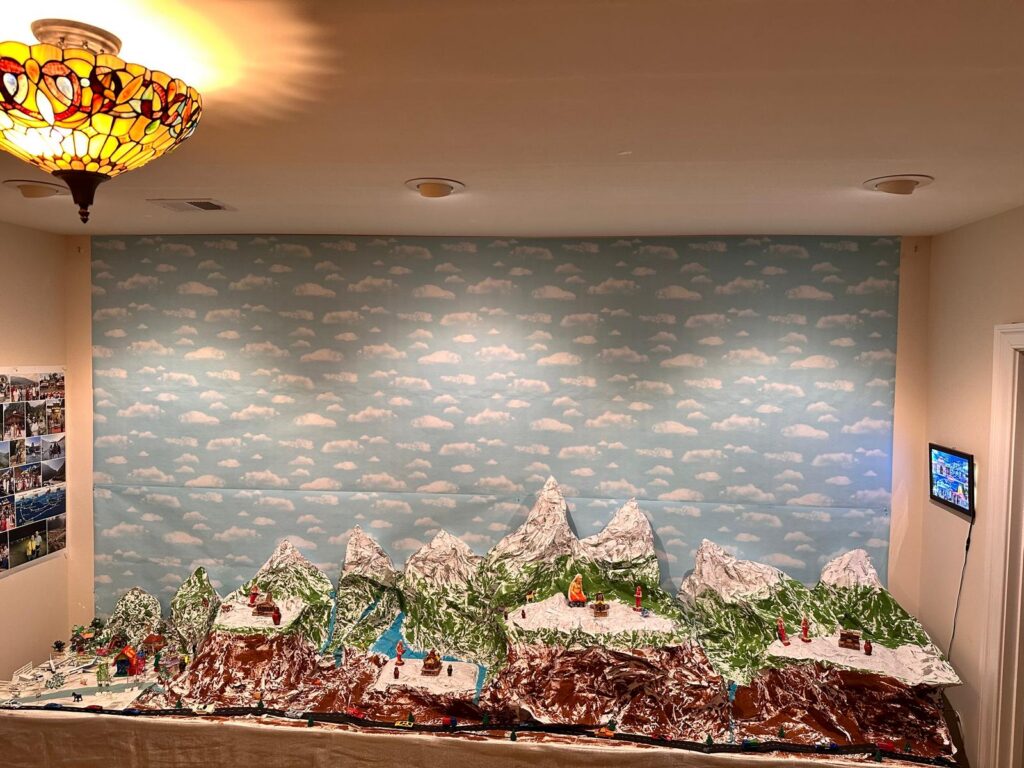
Our family has continued this tradition of setting up dolls for over 25 years in the USA, collecting dolls from India and our travels worldwide. Every year we look around during our travels or elsewhere for a new doll to add to our collection. Each year, our Bommala Koluvu features a story-based theme; this year’s display recreated our journey to the four ancient Chardham temples in Uttarakhand (India), by creating mountains and landscapes with paper and cardboard boxes and painting them. This annual activity serves as a bridge between generations, allowing me to share the experience with my daughters just as I did with my mother in India. By inviting friends and family to view the display, we cherish community memories while ensuring our cultural heritage and stories are preserved for the future.