Along for the Ride…A Programming Spotlight
By DANA A. JOHNSTON, Executive Director, Lift Me Up! | Photos by MYRTLE ROY
“WE MAKE A LIVING BY WHAT WE GET, BUT WE MAKE A LIFE BY WHAT WE GIVE.” — WINSTON CHURCHILL
In the Article that appeared in the September issue of Great Falls Living Magazine we introduced the concept of the “Healing Power of Horses”. In doing so, I shared some specific programs that we offer at Lift Me Up! I would like to expand on the concept of the “Healing Power of Horses” to look at what the data says. How do we qualify or quantify results to demonstrate the efficacy of our programs and the Effectiveness of horses as a therapeutic tool or modality. To do this, I will focus on our “Silver Herd” program established to facilitate the interaction between adults diagnosed with early onset Dementia. I will also introduce the findings of The Connected Horse project, an exhaustive study conducted through a partnership between the UC Davis Center for Equine Health and the UC Davis School of Medicine. This project focused on the benefits of Equine Assisted Services and Therapy on Dementia patients.
Over 55 million people have dementia worldwide. In the United States, more than 6 million people are living with Alzheimer’s. This number is projected to rise to nearly 13 million by 2050. Every year, there are nearly 10 million new global cases. Additionally, people are being diagnosed earlier in the process. Living with and providing care for someone affected by early-stage dementia is becoming more of a global reality. Family caregiving remains the most common form of care both in the U.S. and around the world. Yet few specific services exist to meet the needs of this population and their family caregivers. Research from around the world finds that stress, anxiety, and depression typify experiences for caregivers.
HUMAN-HORSE INTERACTION
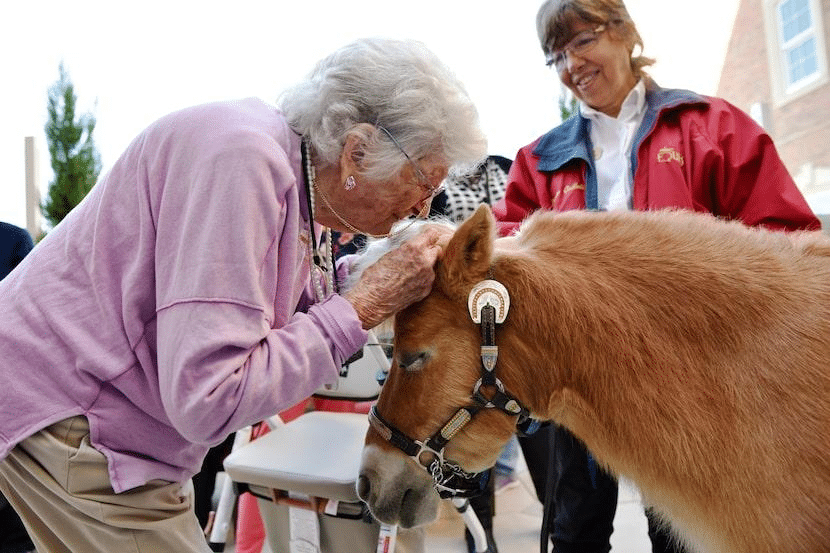
As I previously shared, horses have evolved over millions of years as prey animals to be highly in tune with their environment. They survive in the wild by reading and reacting to cues from their surroundings and their herd mates. They seek calm confidence and look for leadership, which makes them a great social mirror as they will react to humans and reflect back the energy of the interaction. Horses can teach humans confidence, self-awareness, and self-control. Since horses live outside, movement and the stimulation of the environment are added bonuses to the interactions.
The Connected Horse Project harnessed the amazing social benefits of the horse-human interaction while also giving older horses useful roles in modern day society. The benefits of equine-assisted therapy have been well-documented for autistic children, children with physical disabilities, victims of Post-Traumatic Stress Disorder, and in prisoner rehabilitation programs.
RESEARCH FINDINGS
The Connected Horse Dementia program is based on a coaching engagement model validated through research at Stanford University and the University of California, Davis.
Through a workshop-based model, these workshops help care partners and patients with dementia diagnoses learn how to focus on the present, be aware of their own responses, self-regulate and release roles. In addition to learning skills, participants experience hope, increased self-confidence and the joy of being together. The workshops include wellness activities with horses, discussion groups and skills development using mindfulness-based practices, family systems approach, and experiential learning opportunities.
The facilitators use cues found in typical herd behavior, including the horses’ innate abilities to mirror participants’ emotions/energy, and the natural environment to support the multi-sensory responses. The equine activities include four over-the-fence interactions, grooming, leading, and watching horses in pastures.
The first research project at Stanford University used a pre/post-test design with standardized measures of stress, burden, mood, and social support for patients and care partners. Quantitative and qualitative findings from 26 participants indicated significantly increased positive perception of social support, greater reciprocity, awareness, upliftedness and appreciation of one another. The collaboration at the UC Davis Center for Equine Health engaged additional pairs with retired horses, extending the same protocol used at Stanford. Results indicated significant positive change in the social support scale and decrease in depression scores. Early analysis of the qualitative data supported trends for improved mood, greater reciprocity, awareness and appreciation of the dyad (human – horse or human -human relationship).
CASE STUDY (STORY)
Mrs. D is a care partner for her husband and mother with dementia. During the workshops, she wanted to find focus and meaning to her life situation. She found the answers singing to a horse who was upset because another horse left the paddock. She wasn’t singing on key, she didn’t know all the words. It didn’t matter. The horse came up to her, lowered his head and calmed down. Her internal desire was to slow down and be present, enjoy being with the horse and her husband. The horse responded. After this experience, she realized that she and Mr. D could still stay connected and that they still had the gift to help others and each other.
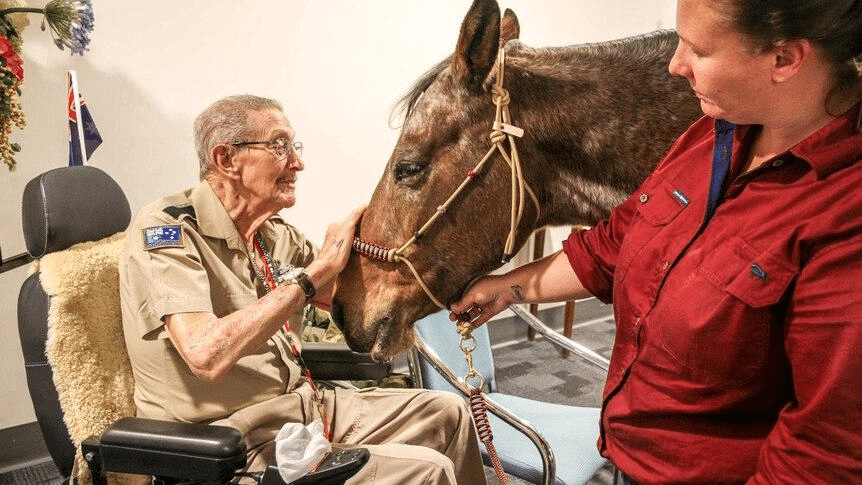
DEMENTIA CARE: CONNECTION BEYOND WORDS, THE SILVER HERD
For people living in long-term care facilities, and memory care facilities (living with Alzheimer’s disease or a related dementia diagnosis), equine-assisted programs offer a rare kind of engagement — one that does not rely on memory or verbal fluency. Activities like grooming, feeding, and leading a horse tap into sensory and procedural memory that often remain intact even as other cognitive functions decline.
In response to the need for more activities that our population can enjoy, Lift Me Up! created the “The Silver Herd” program to allow residents of retirement, assisted living and memory care facilities to opportunity to interact with horses. In this case specifically through “Miniature Healing” by engaging our three miniature horses.